Civics for Water Advocates: From Local Water Challenges to Federal Action
Friends of the Chicago River and the Illinois Environmental Council (IEC) hosted "Civics for Water Advocates: From Local Water Challenges to Federal Action" on Friday, October 9, bringing water advocates together to learn how federal policies and investments shape water priorities in Chicago and across Illinois.
The training began with a networking session and an introduction from Friends and IEC that framed the importance of civic engagement in advancing water issues. Participants received an overview of federal water policy, including the Great Lakes Restoration Initiative (GLRI) and the Water Resources Development Act (WRDA), and learned how these programs support water infrastructure, flooding, environmental restoration, and access to clean water in Illinois. The training also walked participants through how a local water challenge can move through the federal policy process, from congressional authorization and appropriations to federal agency implementation and ultimately to projects delivered in communities.
“The decisions made at the federal level have a direct impact on the health of our rivers and the communities that depend on them,” said Margaret Frisbie, executive director of Friends of the Chicago River. “When people understand how federal policy works and how to make their voices heard, they can help turn local water priorities into meaningful action.”
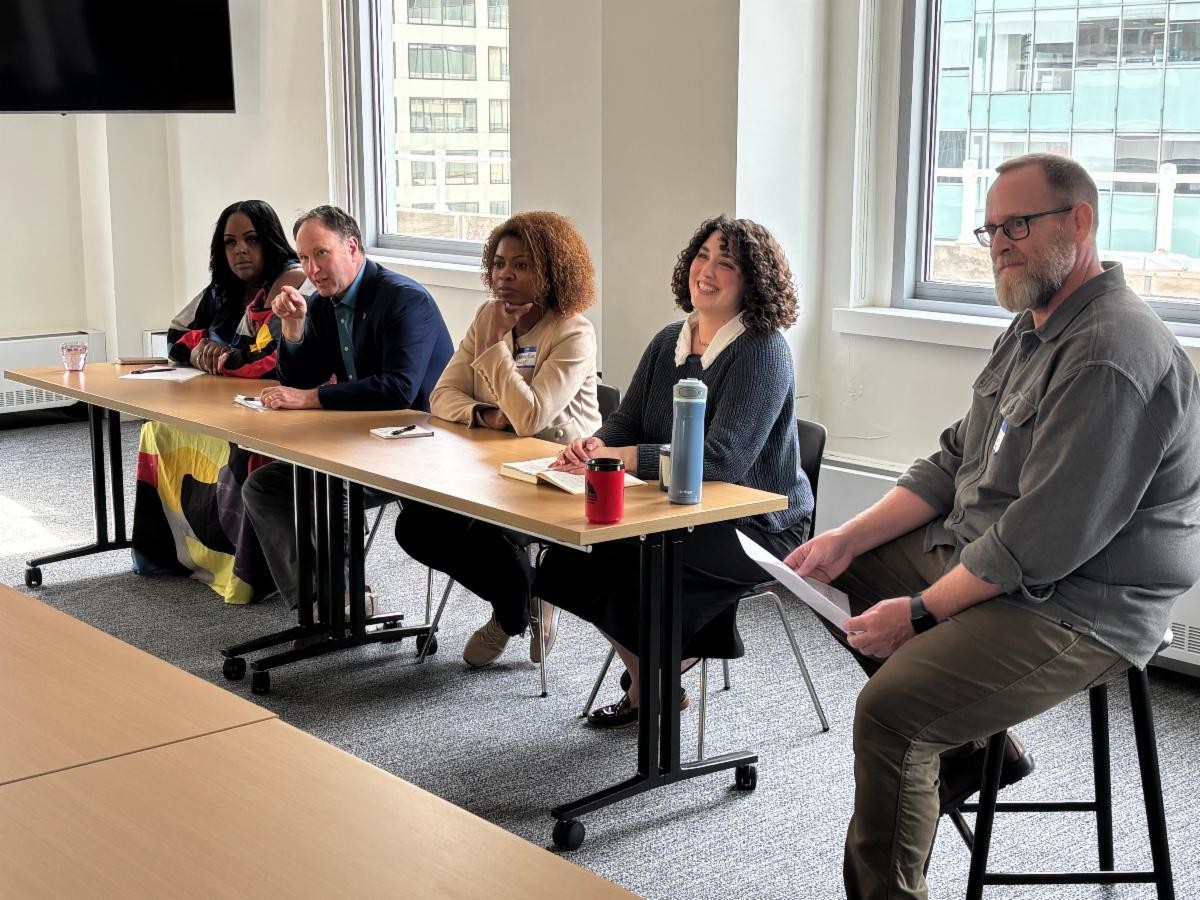
A panel moderated by Friend’s Director of Policy and Conservation John Quail featured Chaneka Sims of the Natural Resources Defense Council, Adella Bass of People for Community Recovery, Kylah Seltzer Johnston from Cook County Bureau of Asset Management, and Cam Davis, commissioner of the Metropolitan Water Reclamation District of Greater Chicago. Speakers shared on-the-ground perspectives about the impacts of federal water policy on communities and discussed current priorities and opportunities for engagement.
The training also included an interactive mock congressional meeting in which participants practiced delivering key messages to a Member of Congress about a water issue that mattered to them. Participants were encouraged to lead with local impacts, pair a community story with a compelling statistic, make one clear ask, and keep supporting materials concise. The hands-on activity gave attendees an opportunity to put their advocacy skills into practice and think about how local water challenges could be translated into effective federal action.
