Friends Raises Awareness for Plastic Pollution Action in DC
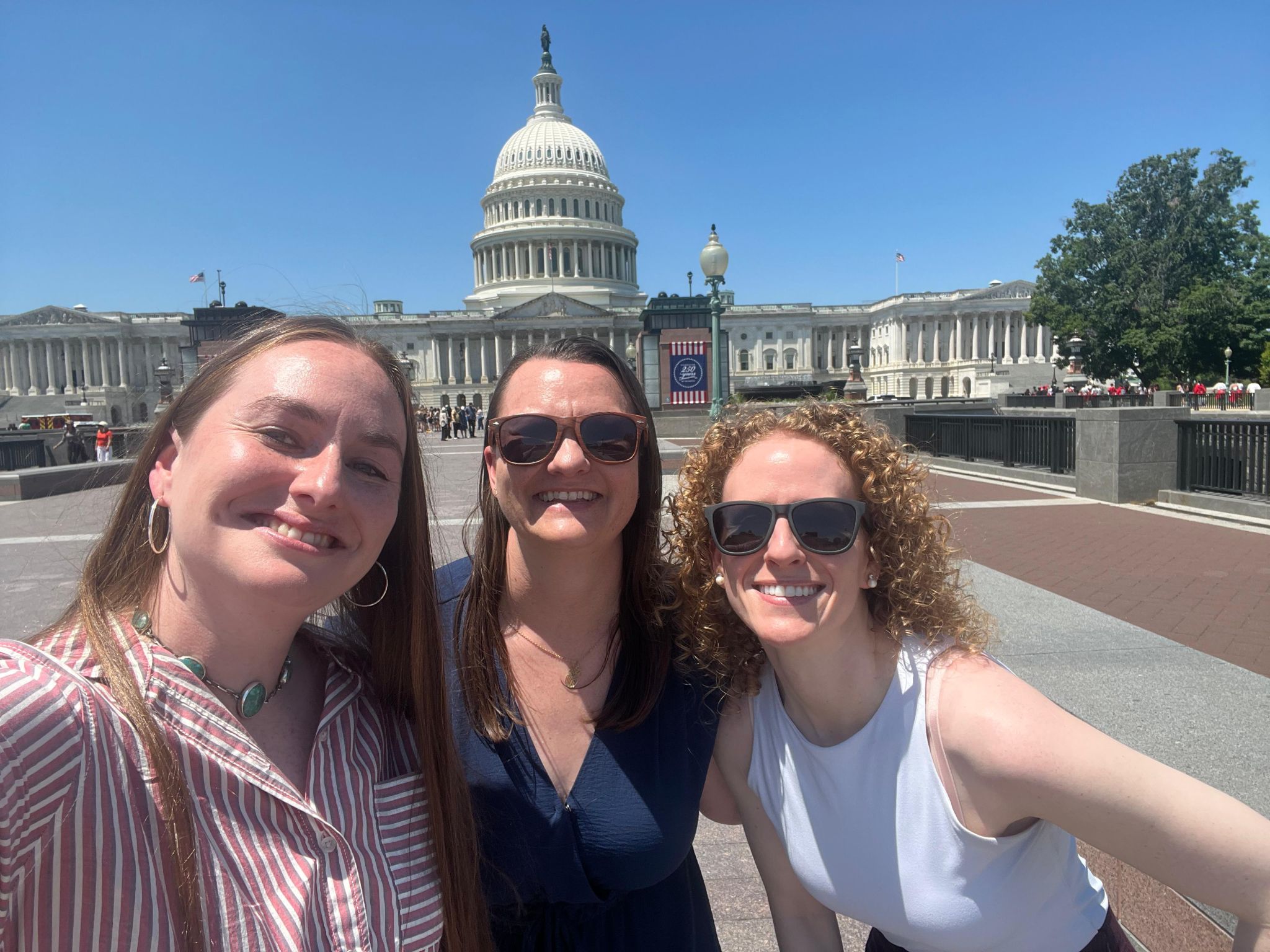 Friends' Becky Lyons (center) with Olivia Reda of Alliance for the Great Lakes (left) and Caitlin Hart of Ocean Conservancy.
Friends of the Chicago River’s Director of Equity and Engagement Becky Lyons traveled to Washington, D.C., this month to meet with Members of Congress and advocate for stronger action to address plastic pollution and support federal marine debris programs.
Check out Becky on Instagram in front of the Capital explaining why this work is so important.
Lyons participated in the meetings organized by the Ocean Conservancy and its International Coastal Cleanup program, joining environmental organizations from across the country to speak directly with congressional offices about the growing plastic pollution problem affecting waterways nationwide.
Representing Illinois alongside the Alliance for the Great Lakes, Lyons met with Illinois Members of Congress and their staffs to raise awareness of the importance of the NOAA Marine Debris Program and the Farewell to Foam Act, legislation aimed at reducing harmful single-use foam products.
During the meetings, Lyons shared firsthand experiences from Friends’ cleanup and restoration work throughout the Chicago-Calumet River system, emphasizing how widespread plastic pollution has become in the river system.
“Anyone who has participated in a cleanup can see the scale of the problem,” Lyons said. “Plastic makes up about 85 percent of the litter we find in and along the river system, which mirrors what organizations are seeing across the globe. It was such an interesting and meaningful opportunity to bring our stories, our work, and our river system directly to congressional staff and help connect local cleanup efforts to national policy solutions.”
In addition, Lyons discussed a forthcoming NOAA Marine Debris grant project led by Loyola University Chicago in partnership with Friends of the Chicago River and other local organizations. The initiative will support the installation of Trash Traps designed to capture litter in the river system and Lake Michigan.
Lyons also highlighted the growing number of community-based cleanup organizations working throughout the Chicago region, many of which participated in Friends’ 34th annual Chicago River Day this month. She noted that public enthusiasm for cleaner waterways continues to grow as more residents recognize the impact of litter and plastic waste on local ecosystems.
The Washington meetings reinforced the importance of pairing local action with federal policy solutions, Lyons said, especially as communities across the country demand stronger efforts to reduce single-use plastics and prevent pollution before it reaches rivers, lakes, and streams.
