
(Mostly) Don’t Touch the Turtles
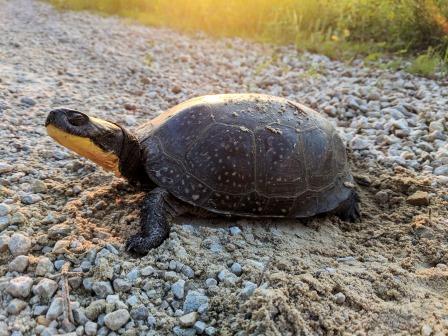
Despite headlines for turtle superstars like Chonkosaurus, tiny turtles—and native turtle breeding success—has been the focus of Friends’ turtle program through which we restored more than 225 acres of prime turtle nesting habitat across five forest preserves since 2014. The work was done because baby and female turtles have a hard time of it with their native habitat overrun by invasive plants and predation by local wildlife such as raccoons and opossum, familiar with the usual nesting sites, eating the eggs and hatchlings. The restoration results have been remarkable: hatchling success rates went from zero to 60%—an astonishing increase that started in the very first year after work was completed.
This time of year, Friends’ eyes are on the turtles again when the females are on the move seeking the right sun and soil in which in to lay their eggs. Among the perils for the female turtles are good intentioned humans who happen upon a turtle and relocate them to “somewhere safe” when in fact the turtle knew where she was going.
As a caution to someone who sees a turtle, consider if the turtle is in imminent danger from car traffic or bicycles. If so, they could consider moving them, but only ever in the exact direction they were already heading. If you see the same species crossing the same stretch of road every spring, that’s a nesting corridor. Slow down in that zone during May and June.
Friends of the Chicago River is excited to continue our turtle efforts and advocacy. A gift of $6,000 enables Friends to add one acre of turtle nesting habitat. Contact Annie Hanrahan at (312) 939-0490, ext. 19 or ahanrahan@chicagoriver.org if you want to lend a turtle a hand.
