Urgent Input Needed on Chicago's Green Infrastructure Strategy. Act Today!
Community input is essential on the City of Chicago’s draft Green Infrastructure Strategy to make sure that the final plan reduces stormwater flows that hurt neighborhoods and harm the river by managing stormwater using natural, that is, “green,” solutions.
Chicago developed the Strategy over 16 months after Friends successfully negotiated a strong National Pollutant Elimination Discharge System (NPDES) permit intended to reduce Chicago’s outfalls discharging sewage and other pollutants into the river to meet federal and state law. That permit was approved by Illinois EPA and went into effect on April 1, 2024.
Chicagoans are encouraged to submit comments on the City's draft Green Infrastructure Strategy through July 10.
Comment Today!
Need help getting started? Consider adapting the following comment:
"I appreciate the City of Chicago's effort to develop a comprehensive Green Infrastructure Strategy and its recognition of the many benefits green infrastructure can provide. To strengthen the strategy and maximize benefits for the Chicago-Calumet River system, I recommend the following:
- Restore the term 'green stormwater infrastructure' in the title and throughout the document. Flood reduction and stormwater management are not simply co-benefits of green infrastructure: they are the primary purpose of this strategy and should remain central to its goals.
- Prioritize green infrastructure investments in areas where they will reduce combined sewer overflows and benefit sensitive areas, including environmental justice communities and locations most impacted by flooding and poor water quality as spelled out in the permit.
- Establish measurable goals, implementation timelines, and clearly identified responsible agencies or entities for each major action. Without accountability measures and clear benchmarks, it will be difficult to evaluate progress and ensure successful implementation.”
Submit your comments here. View the NPDES permit here.
“The City deserves a lot of credit for the work that went into the Strategy,” said Margaret Frisbie, Friends’ executive director. “We just want to make sure that the final version is focused on stormwater which is specifically the purpose as agreed to in the permit. By introducing such a widespread approach, which extends well beyond the NPDES permit they are required to meet, the value is watered-down.”
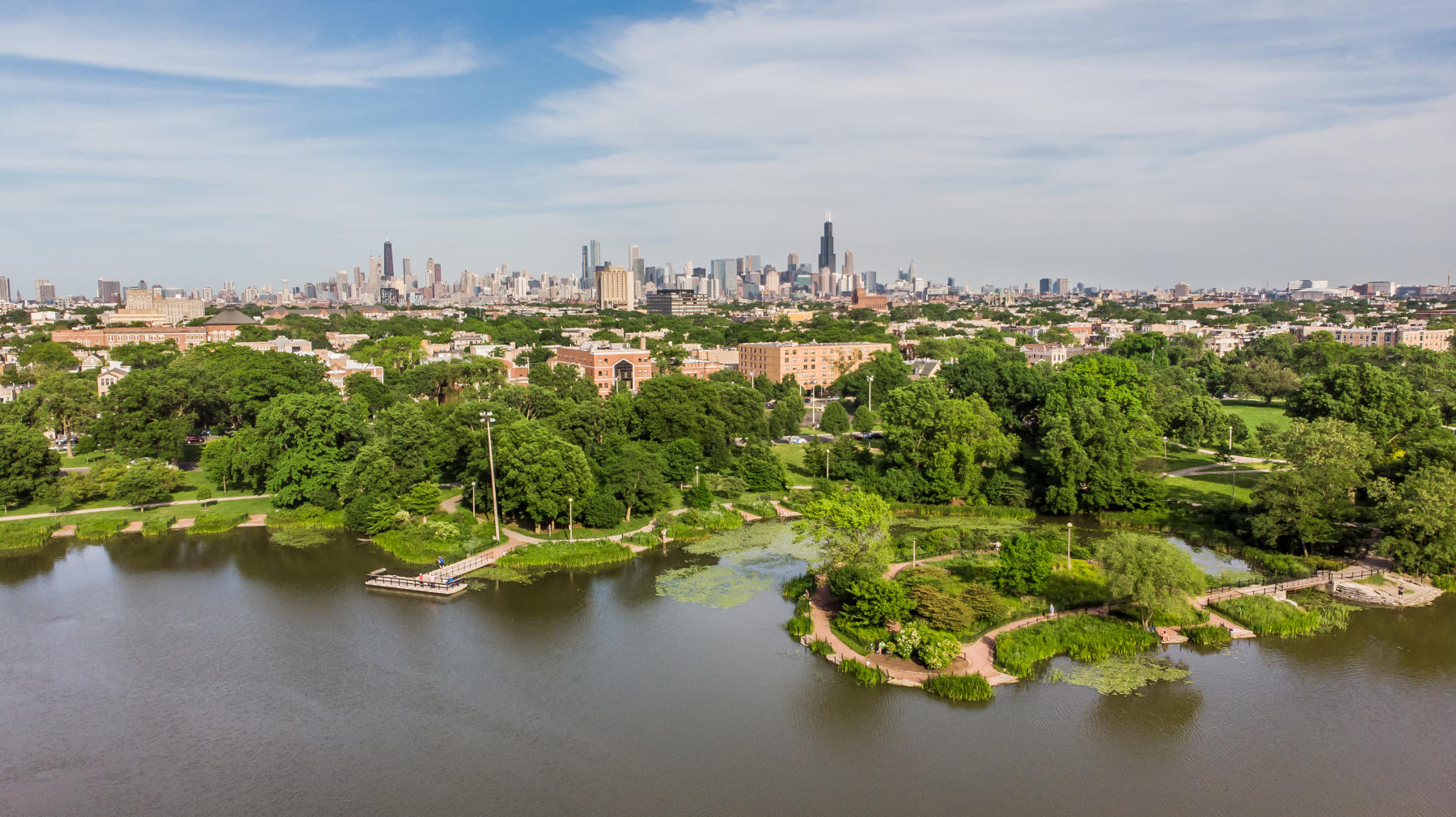
Green stormwater infrastructure refers to nature-based features and practices designed to capture, slow, and absorb stormwater before it enters sewer systems. These solutions include large-scale natural areas such as wetlands, prairies and woodlands, and smaller technologies such as rain gardens, street trees, parks, and permeable pavement. When implemented at scale, green infrastructure reduces combined sewer overflows (CSOs) and flooding, improves water quality, and builds climate resilience across Chicago and beyond.
Community feedback is critical to ensuring this strategy delivers meaningful and equitable outcomes across the city and throughout the Chicago-Calumet River system. Friends of the Chicago River strongly supports the development of a comprehensive citywide strategy and encourages residents to submit comments during the public comment period.
Friends of the Chicago River has long championed the use of green stormwater infrastructure as a critical tool for improving water quality, reducing flooding, and restoring the health of the Chicago-Calumet River system. Through initiatives such as our Blue-Green Corridor approach, Friends works with communities, municipalities, and partner organizations to advance interconnected networks of green spaces, wetlands, permeable surfaces, and other nature-based solutions that capture and clean stormwater before it reaches the river system. Expanding these investments across Chicago can help create healthier neighborhoods, strengthen climate resilience, enhance habitat for wildlife, and reduce pollution entering the river system.
