
Reducing Salt
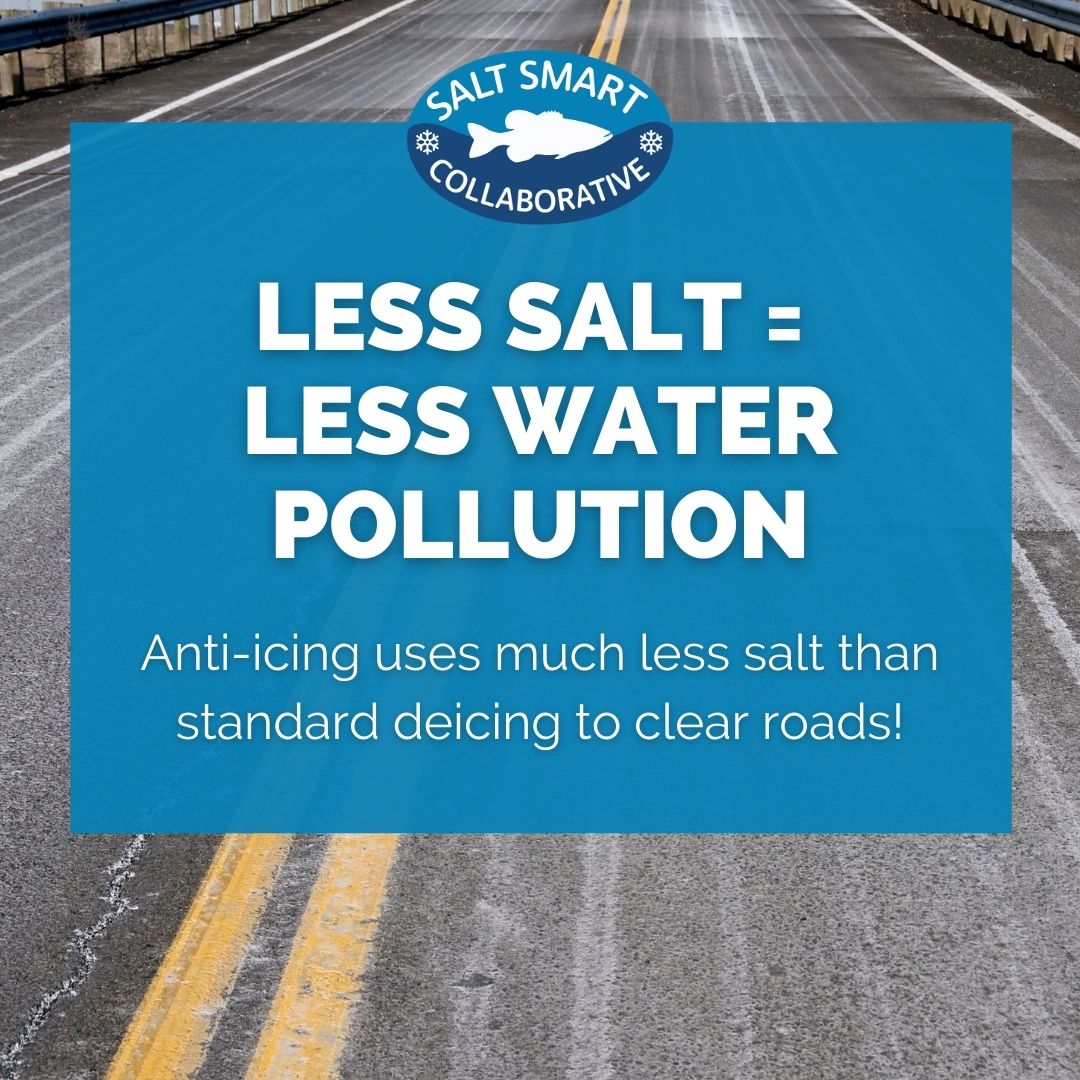
Spreading salt during the winter helps create safer street, sidewalks and driveways, but carries an environmental cost, hurting wildlife, plant life and aquatic ecosystems.
We need to be more mindful of how much salt we use; more salt does not equal more safety! Best management practices to reduce salt usage are available at Salt Smart for individuals, roadway managers, municipalities, and private contractors.
Here are basic guidelines on how to use salt:
1. Shovel first - Salt should only be used after the snow is removed and only in areas needed for safety.
2. Use sparingly - A 12-ounce coffee mug is generally enough salt for a 20-foot driveway or 10 sidewalk squares (250 square feet).
3. Spread evenly - Distribute salt. Clumped salt is wasted!
4. Sweep it up - Sweep up leftover salt.
5. Switch it up - Salt does not work if the temperature drops below 15 degrees. When it is this cold, switch to sand.
Try Salt Alternatives
Salt is intended to break the bond between snow and the pavement, not melt the ice. Consider buying deicing products less harmful to the environment; calcium chloride and magnesium chloride are considered greener options. Calcium magnesium acetate and potassium acetate can also be used instead of salt. You can also make a brine by mixing salt with water and then cover sidewalks with it before the snow falls.
Join Winter Chloride Watchers
We can make a difference by tracking chloride (salt) levels to see how they affect aquatic life and how salt-smart winter practices can reduce the amount of chlorides that reach waterways! Friends partners with The Conservation Foundation and the National Great Rivers RiverWatch’s Winter Chloride Watcher program to contribute to statewide chloride monitoring. Volunteering for this community science program is easy; you’ll learn the basics of chloride monitoring and how to report your data. The data collected is publicly available with a synopsis available here.
If you are interested in becoming a Winter Chloride Watcher, please sign up for the CREW volunteer newsletter here, or contact The Conservation Foundation directly.
Remember, since no salt product is good for the environment, the best option is to go easy on the salt!
Learn more about why salt is bad for the Chicago River system here.
